Whether you’re awaiting dental implant treatment or just trying to understand your bone grafting options, it can be hard to get clear, honest information.
That’s why we created articles that simplify the science so you can understand what your dentist might not be telling you:
Read Our Patient-Focused Blog
Watch Our Patient Education Videos
Get Informed.
You should know that most dentists are still using 50-year-old technology when it comes to dental bone grafting materials and don’t realize there are newer, safer options.
Dental bone grafting and implant procedures occur every day, yet many dentists are still not aware that their current use and understanding of cadaver bone graft materials is inaccurate and not supported by modern science.
If You Choose Not to Have a Graft
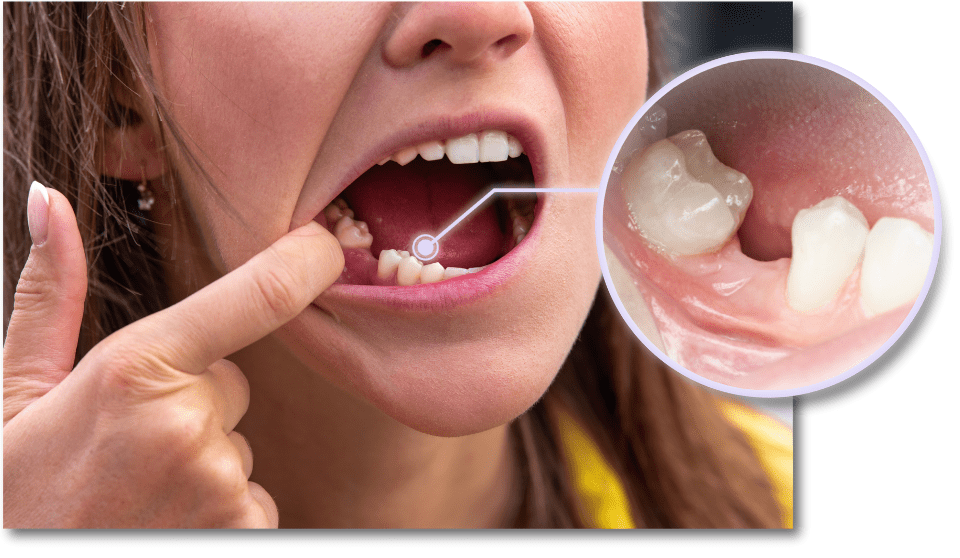
When a tooth is removed, bone in the socket is exposed to the oral environment and is filled with bacteria. To prevent the bone from being infected, our bodies produce an inflammatory response.
The extraction socket begins to fill with a gelatinous fibrin clot that is packed with inflammatory cells sent to the area by your body to fight infection. If infection is warded off, your gums will slowly grow over the fibrin clot.
The clot is converted into a very dense fibrous tissue, which is slowly replaced with bone over a period of months.
However, because the bone is left exposed to heal on its own without the aid of a bone graft, this results in a significant amount of bone loss in the extracted site during the healing process.
Due to the bone loss, the socket wall that once held the tooth in place collapses, resulting in poorly fitting appliances and often an insufficient amount of bone needed to for a dental implant.
This is what is expected in the normal healing of an extraction socket that is not grafted.
Science-Based Bone Grafts
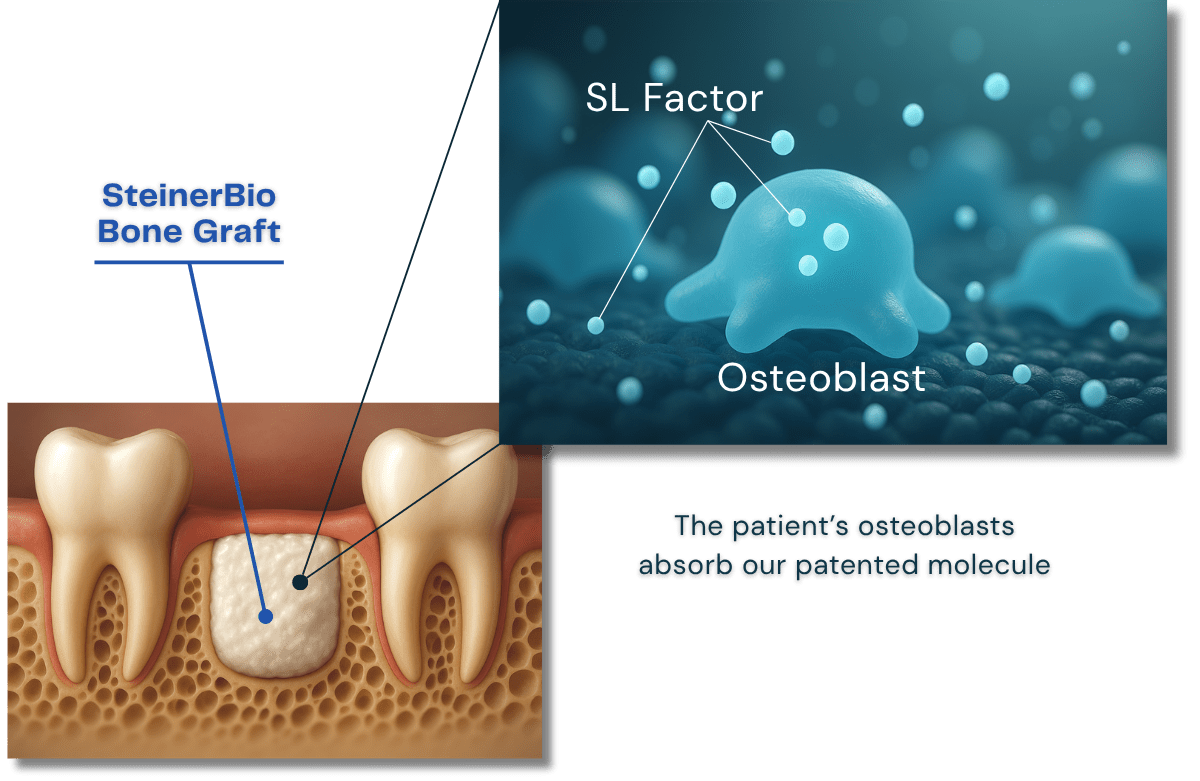
Our bone graft products contain an organic compound (SL Factor) that enters your bone-producing cells (osteoblasts) to make them productive.
This organic compound already exists in the body, but because our bodies lack adequate amounts of it to regenerate enough new bone, your dentist would have to place our bone graft in the affected area.
As the osteoblast cells encounter our organic compound, they begin to absorb it through their cell membrane.
After processing the compound, the osteoblasts secrete an unmineralized organic matrix called osteoid, which matures into permanent new bone cells.
Since the regenerated bone is new tissue, it will be stronger, healthier, and more vital.
More importantly, the tissue is also normal, which means it can remodel, making it ideal for implant placement.
Subscribe to Stay Informed.
Because being health-literate is being empowered.
Sign up for our email list to receive critical information and expert commentary on bone biology, implantology, and regenerative dentistry: