
BONE SCIENCE
Bone is living tissue.
Bone is not a static structural material. It is a vascular, cellular tissue that is continuously formed, resorbed, repaired, and adapted to the loads placed upon it. Understanding bone grafting starts with understanding that biology.
WHAT MAKES BONE LIVING?
Bone is a system, not a substance.
Clinically meaningful regeneration depends on mineral density. It depends on the cells, signals, and blood supply that allow bone to form, respond to load, and remodel over time.
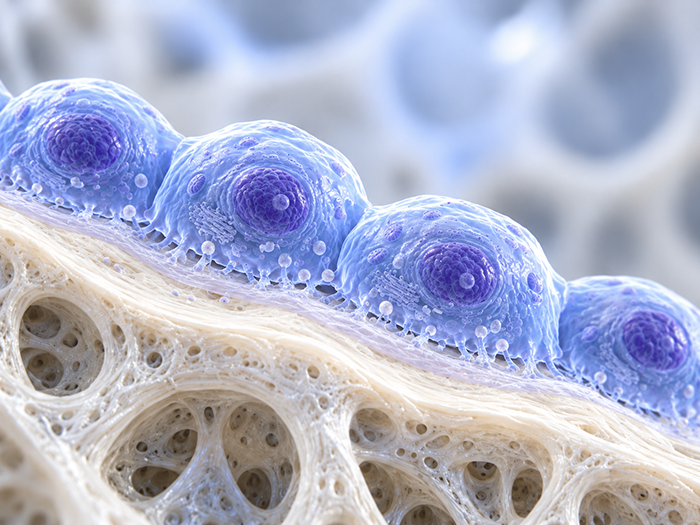
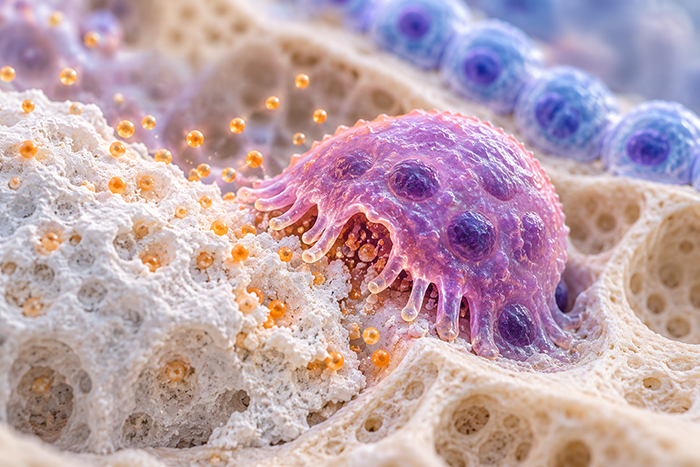
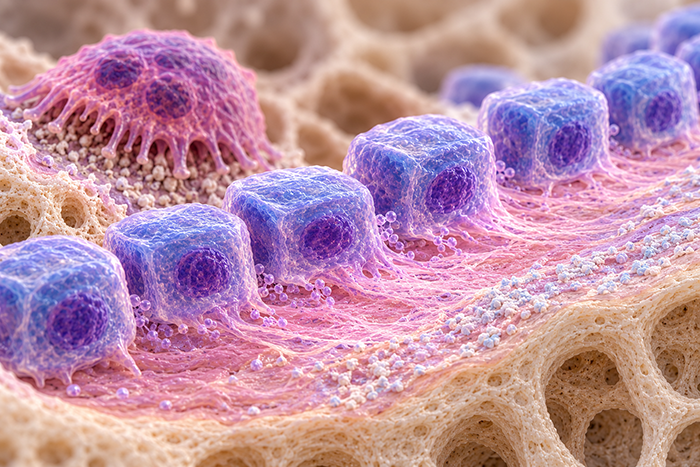
Osteoblasts
BUILD
Produce a new bone matrix (osteoid) and help mineralize and mature into new bone.
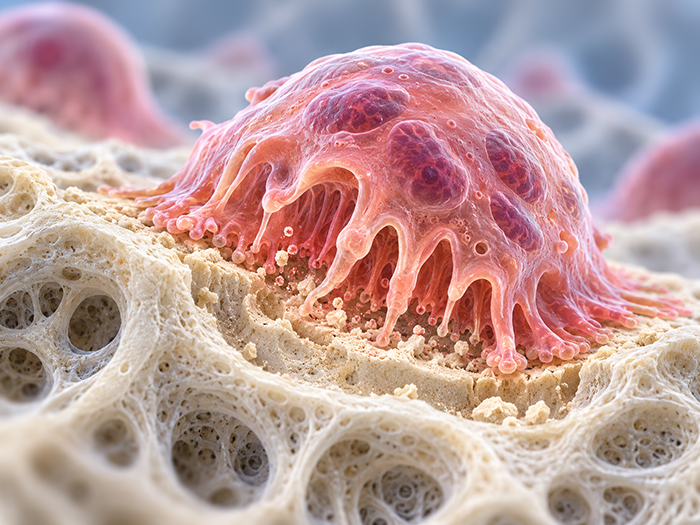
Osteoclasts
RESORB
Remove old or damaged tissue as part of a controlled, normal turnover process.
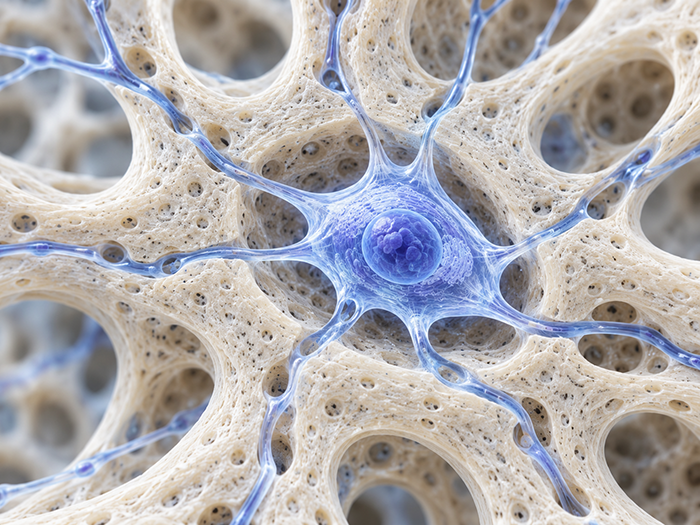
Osteocytes
SENSE & COORDINATE
Embedded within bone, they detect mechanical strain and help direct remodeling.
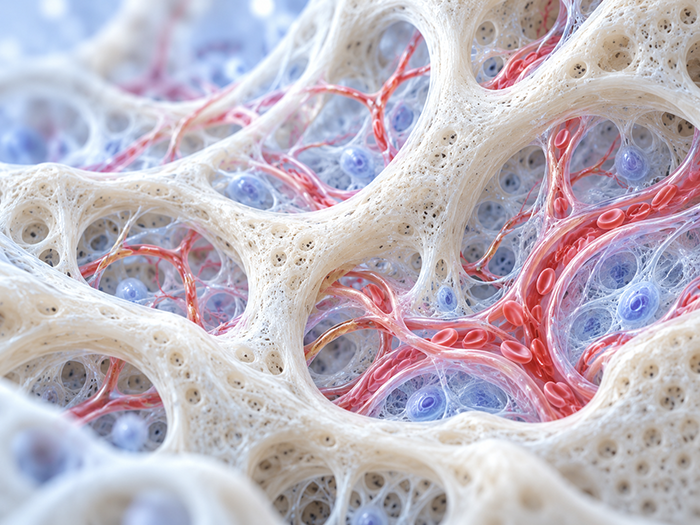
Vasculature
SUSTAIN
Provides oxygen, nutrients, and signaling molecules to support bone health.
REMODELING IS THE REAL TEST
Living bone is mineralized, but it is also dynamic.
Osteocytes sense mechanical load, communicate with osteoblasts and osteoclasts, and coordinate continuous remodeling.
After extraction or augmentation, bone healing progresses through this tightly regulated process. Inflammation clears the site, followed by new bone formation, mineralization, and remodeling.
When this sequence occurs in a healthy, well-vascularized environment, the result is a vital bone that can adapt to function load, which is the foundation for long-term implant success.
What did your graft actually create?
A grafted site can look dense on a radiograph, feel hard at re-entry, and maintain ridge volume. Yet none of those observations tells you what tissue is actually present.
For decades, these signs have been interpreted as evidence that graft material has been replaced by healthy, vital bone. Histology tells a more complex story.
Traditional allograft and xenograft materials can remain within healed sites long after placement, with less vital bone formation and different remodeling patterns than once believed.
A site can be augmented without being biologically equivalent to the bone it replaced.
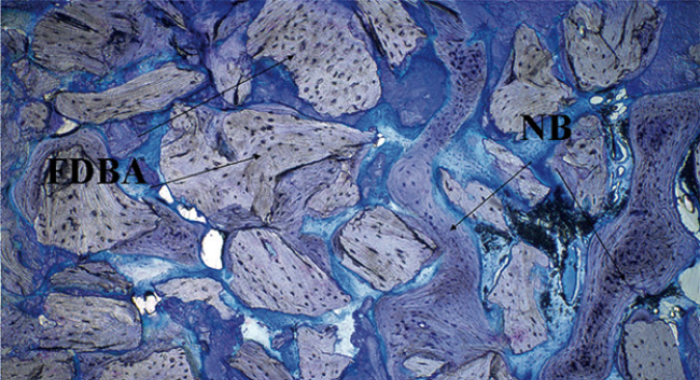
Freeze dried bone allograft 6 months after grafting.
There is no resorption of the graft particles. Areas of chronic inflammation persist. The bone has virtually no vascularity.
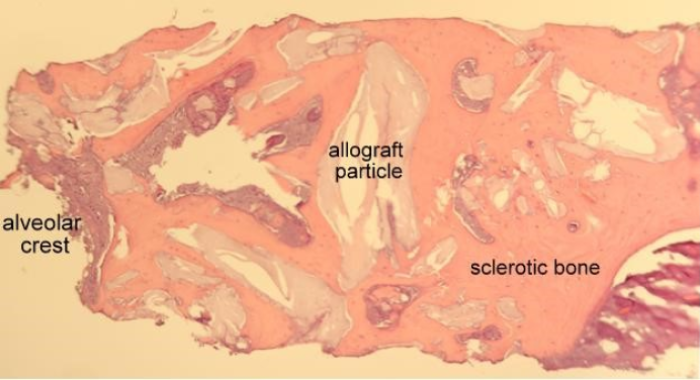
Freeze dried bone allograft 6 months after grafting.
The new bone is sclerotic with very little vascular supply, no osteoclasts, and no bone remodeling is present.
In some cases, a graft particle produces an intense chronic inflammatory response that creates sclerotic bone.
The sclerotic tissue covers the particle and isolates it from the immune system. After the chronic inflammatory response subsides, there is no further resorption or remodeling of the sclerotic bone and the graft particle remains encased in sclerotic bone forever.
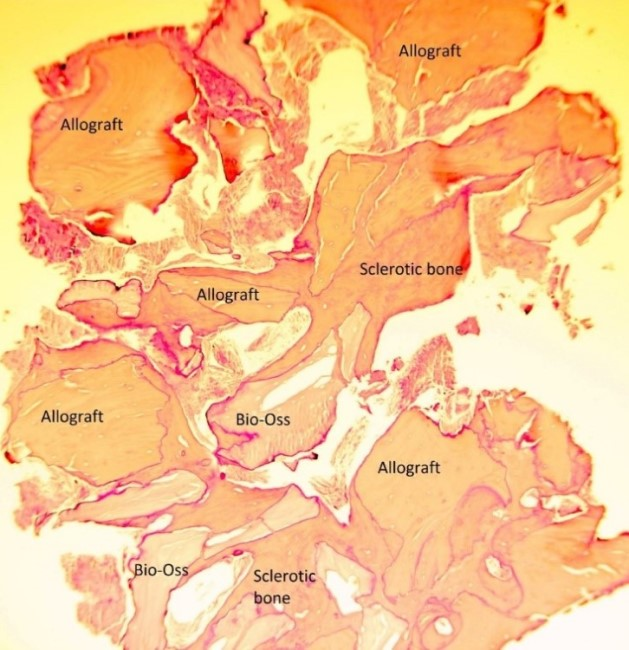
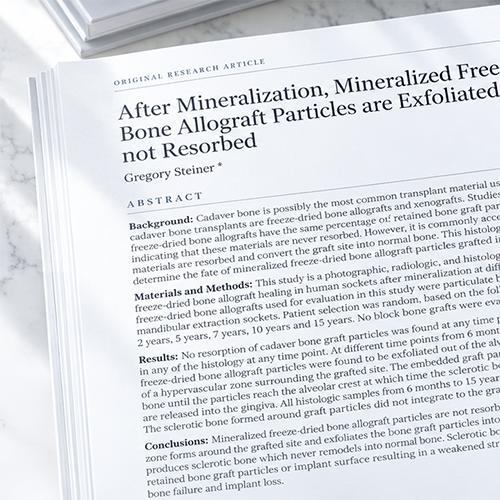
This histology is from a site grafted 15 years prior with a combination of mineralized freeze-dried bone allograft and Bio-Oss. The bone was loaded with an implant for 4 years prior to the implant failing.
These grafts form sclerotic bone and never are resorbed or “turn over” into normal bone
THE STEINERBIO APPROACH
Supporting regeneration through biology, not just filling space.
SteinerBio’s graft materials and proprietary SL Factor are designed to support the body’s natural healing process. Our materials provide an osteoconductive scaffold and a biological environment that enables osteoblast-driven bone regeneration.
HOW SL FACTOR WORKS
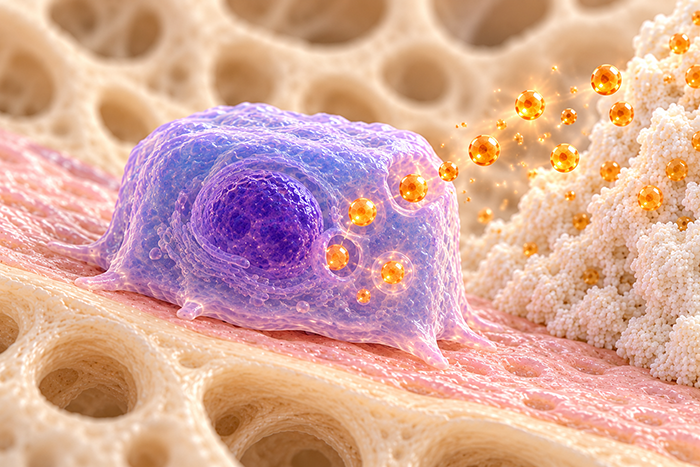
A patented organic compound designed to work inside the osteoblast.
SL Factor is incorporated into SteinerBio graft materials and released as the synthetic matrix changes during healing.
The compound is taken up by the patient’s own osteoblasts where it is designed to influence the cellular activity involved in osteogenesis.
Rather than supplying an external growth factor, SL Factor works through the osteoblast itself, supporting the cell’s own bone-forming machinery.
The objective is not simply to leave a mineralized graft behind. It is to support the patient’s own osteoblasts as they build new, living bone.
RELEASE
SL Factor becomes available as the graft matrix resorbs.
The compound is released from the synthetic graft environment as healing progresses.
UPTAKE
SL Factor enters the osteoblast.
SL Factor crosses the osteoblast cell membrane and is taken up by the cell, where it can influence intracellular activity associated with bone formation.
RESPONSE
The osteoblasts proliferate and increase bone-forming activity.
While stored in the osteoblast, SL Factor continues to stimulate bone growth after the synthetic matrix has been resorbed
SteinerBio research has reported in the activity of more than 300 genes involving pathways associated with BMP2, RUNX2, osteocalcin production, mineralization, and regulation of osteoclastogenesis. Specific reported effects include:
Bone formation signaling
BMP2 + RUNX2
Matrix maturation
Osteocalcin + mineralization
Remodeling balance
RANKL / osteoclastogenesis
Inflammatory signaling
Prostaglandin synthesis
Follow the science.
Explore the evidence, deepen your knowledge, or see how SteinerBio products can support your clinical goals.

RESEARCH
Explore clinical research, publications, and real world evidence.
ARTICLES
Explore articles on the materials, techniques, and assumptions shaping modern implantology.
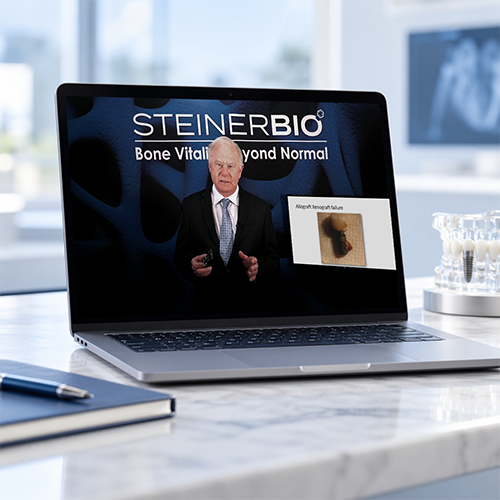
CE COURSES
Advance your knowledge with accredited on-demand continuing education videos.
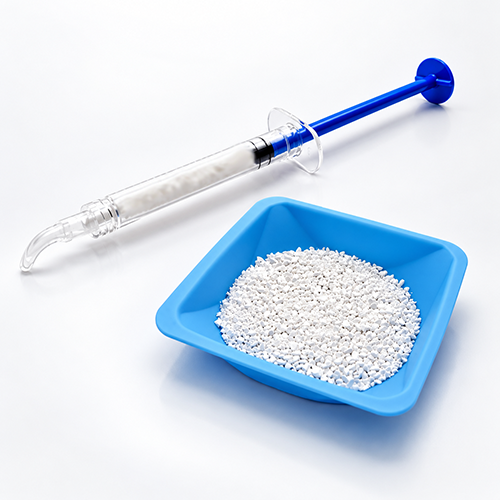
PRODUCTS
Discover regenerative materials and novel tools for your clinical practice.