Trans-Osseous Sinus Augmentation

and Sinus Implant Repair

It is not uncommon for an implant to lose bone at the apex within the sinus over time or for sinus augmentations to fail to regenerate sufficient bone to cover the apex of the implant. The following case is a method of regenerating the bone in the maxillary sinus for implant placement while at the same time covering the apex of a preexisting implant.

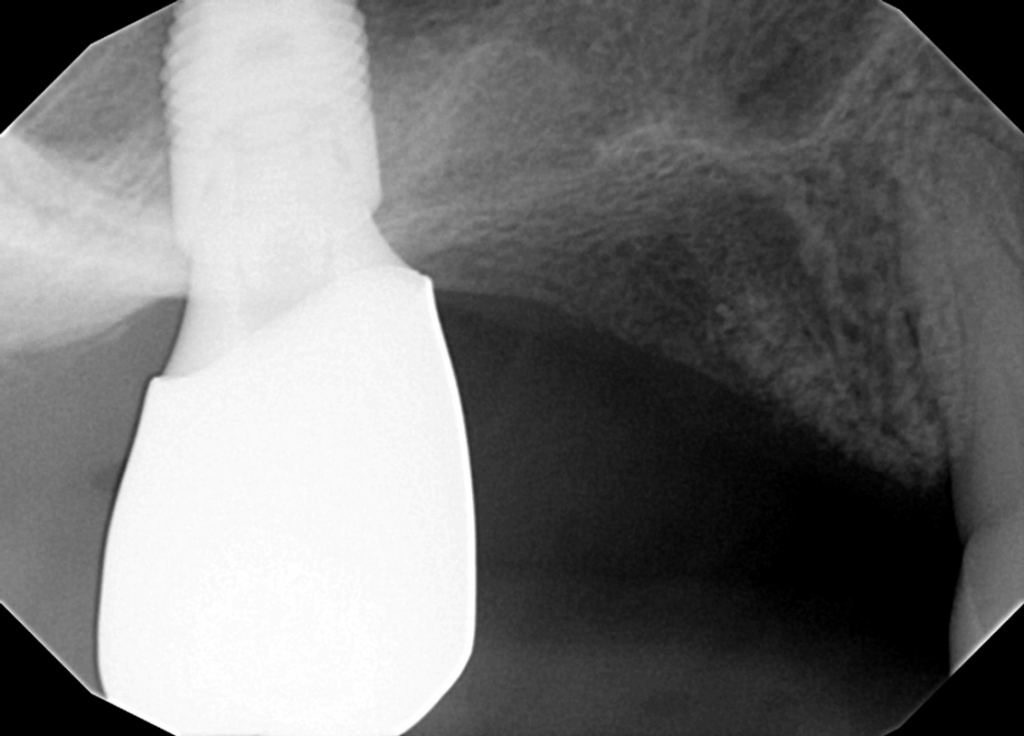
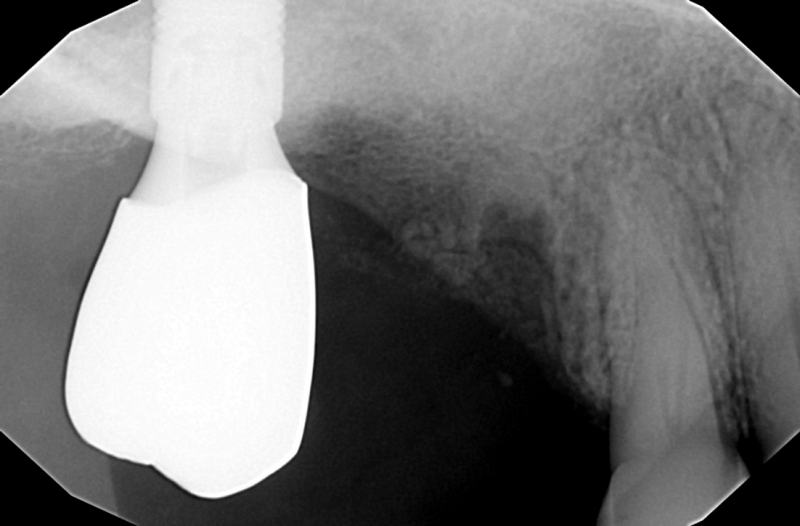
In this case, Implant #2 had experienced exposure of the apical portion of the implant. The plan was to place implants in the areas of 3 and 4 and to graft over the apex of the existing implant.

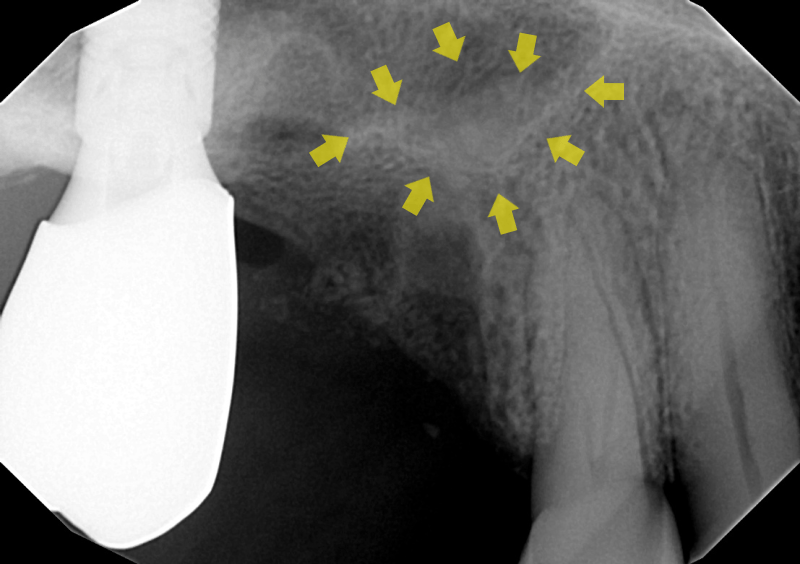
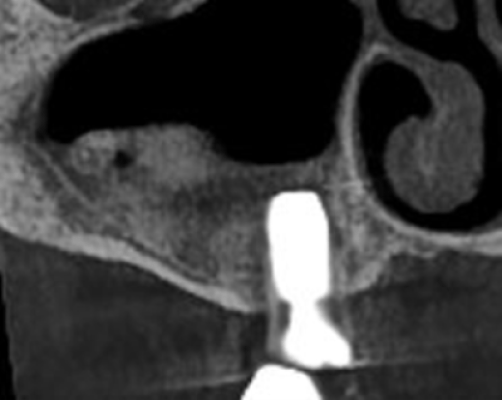
Pre-op radiograph. The initial graft site is in the area of #4 where the sinus dips into the alveolus.

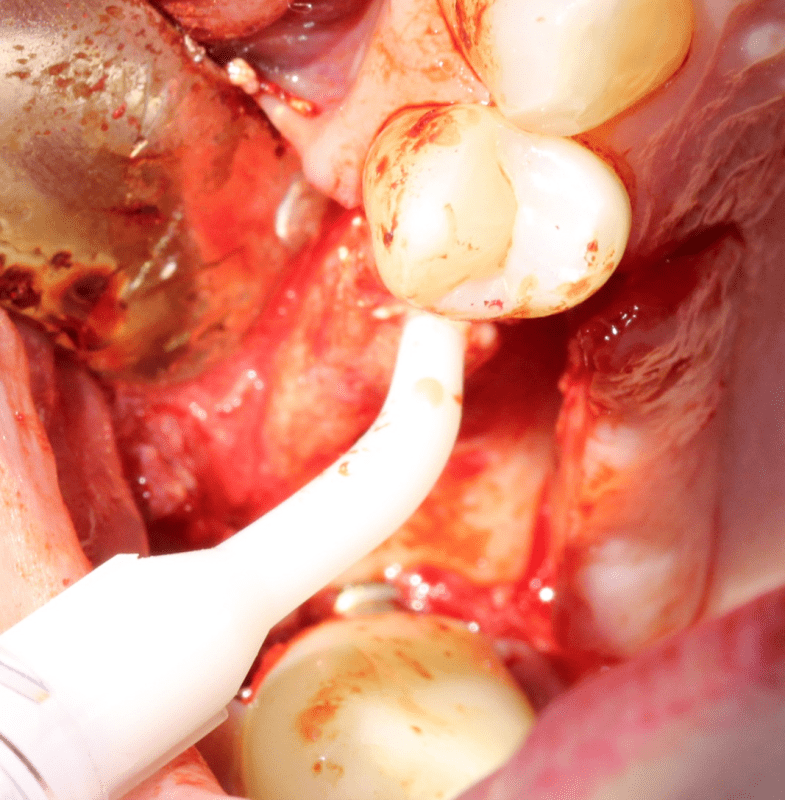
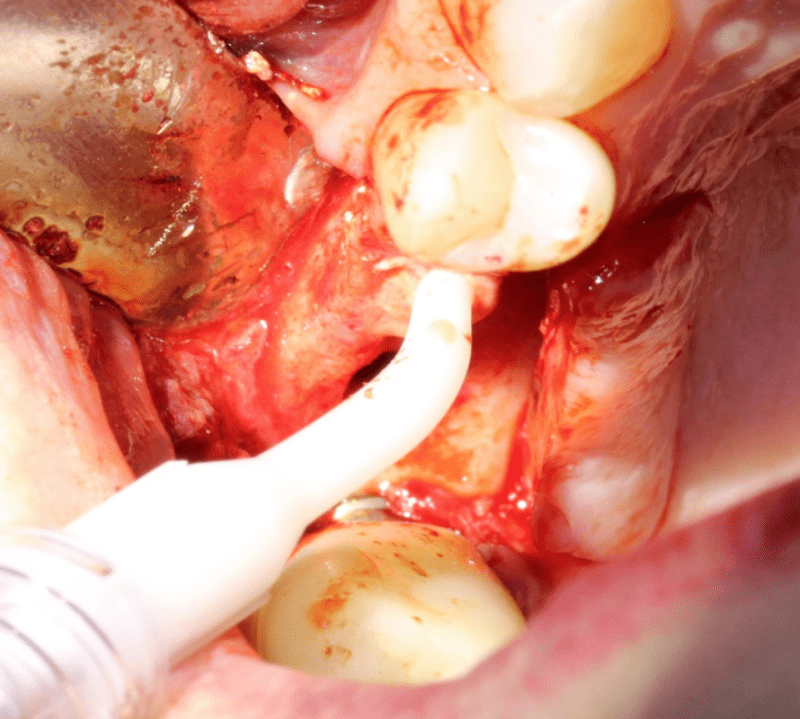
An osteotomy is performed short of the sinus leaving approximately 1 to 2 mm of bone between the osteotomy and the sinus membrane. At this point, the osteotomy is filled with BioDensification. This image demonstrates the application of BioDensification filling the osteotomy.

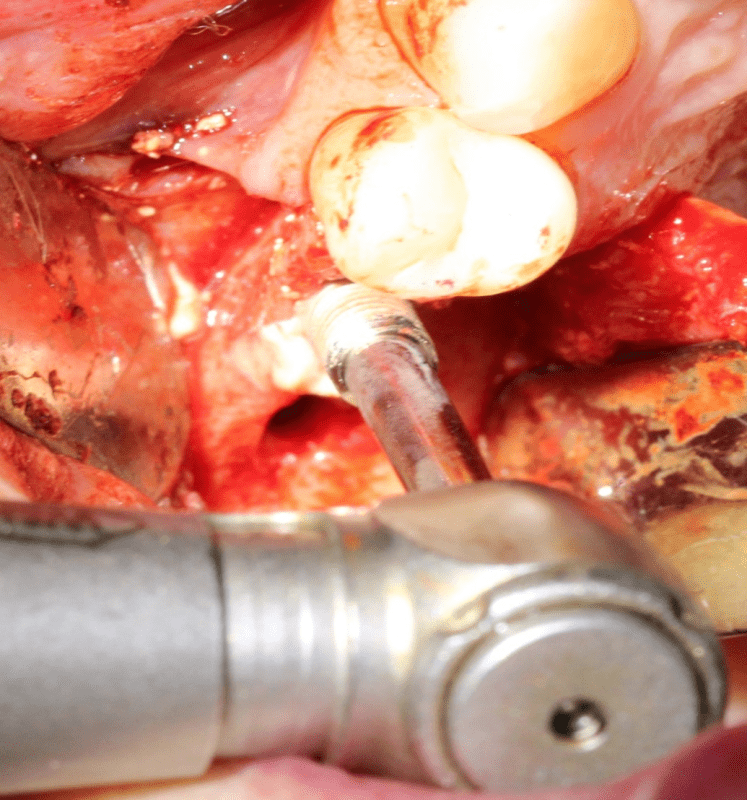
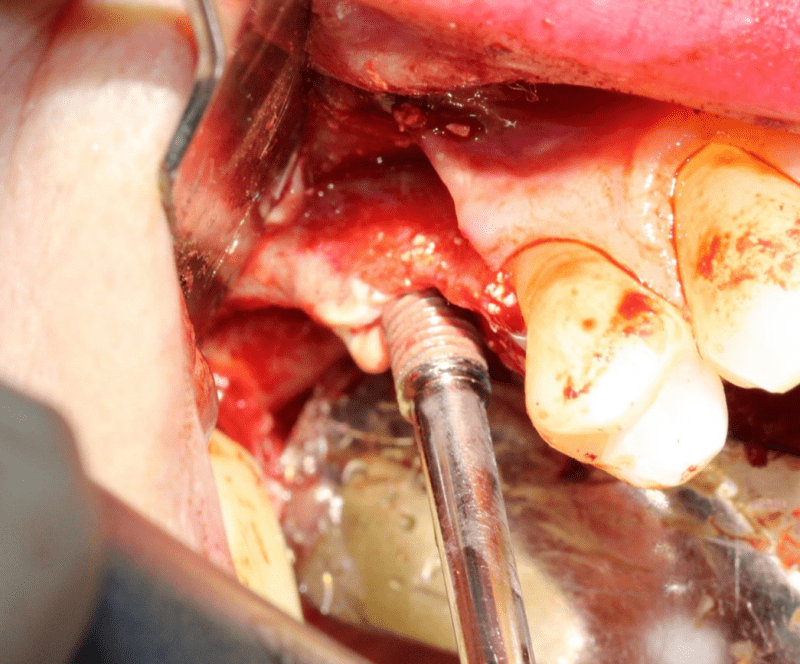
After filling the osteotomy with BioDensification, the driver is used to enter the filled osteotomy and push the bone graft through the bone via hydrodynamic pressure lifting the sinus membrane from the floor of the sinus.

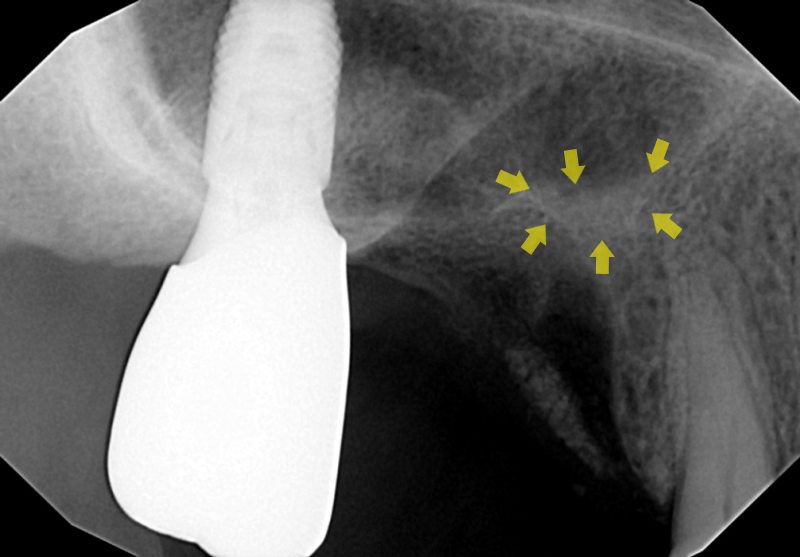
In the area of #4, you can see the osteotomy and how BioDensification has lifted the sinus membrane off the floor of the sinus.

After the first application of BioDensification, additional BioDensification is added to the osteotomy.

After refilling the osteotomy with BioDensification, the driver is used to re-enter the filled osteotomy to push more graft into the sinus and under the membrane to increase the sinus bump.

After the sinus bump has been prepared, the sinus is ready for entry. If the bone is soft, as is often the case when the tooth has recently been removed, the driver is used to push through the remaining bone and into the sinus as was done in this case. If the floor of the sinus is hard, use an implant drill to enter the sinus.

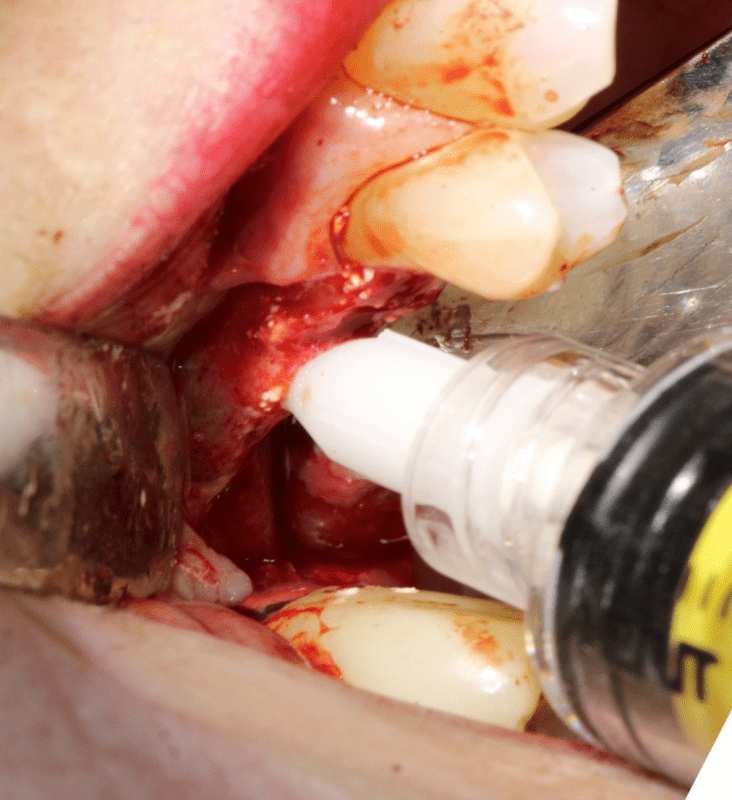
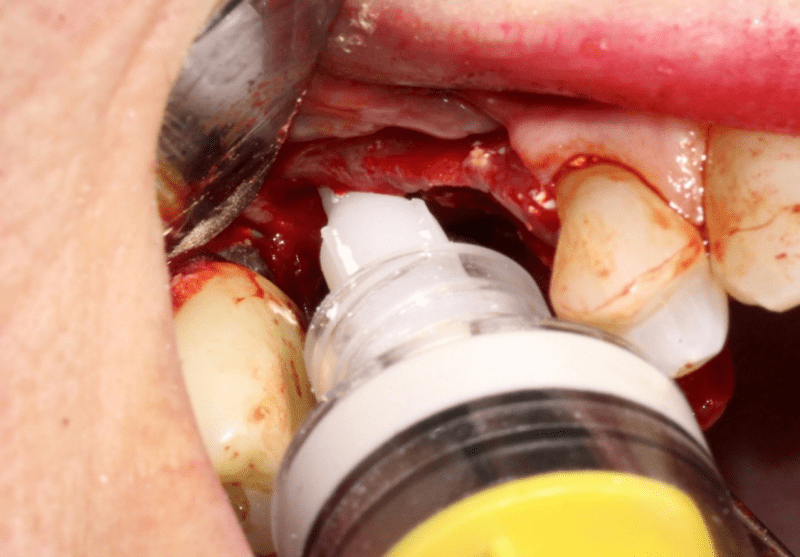
In this case, we need much more volume than a simple sinus bump. To achieve complete fill of the floor of the sinus, the dispensing tip of Sinus Graft injectable syringe is cut to fit the osteotomy and Sinus Graft is injected into the sinus lifting the sinus membrane and filling the floor of the sinus.

Each Sinus Graft syringe contains 2cc of graft material. In this case, one syringe of Sinus Graft was used to lift the membrane and fill the floor of the sinus.

In order to insure the sinus membrane is lifted off the implant and fills the posterior of the sinus, additional Sinus Graft material is injected into the distal osteotomy for implant #3. The previous grafting had lifted the membrane in the area of #3; so, drilling the osteotomy was simply drilling into the graft material on the floor of the sinus above #3.

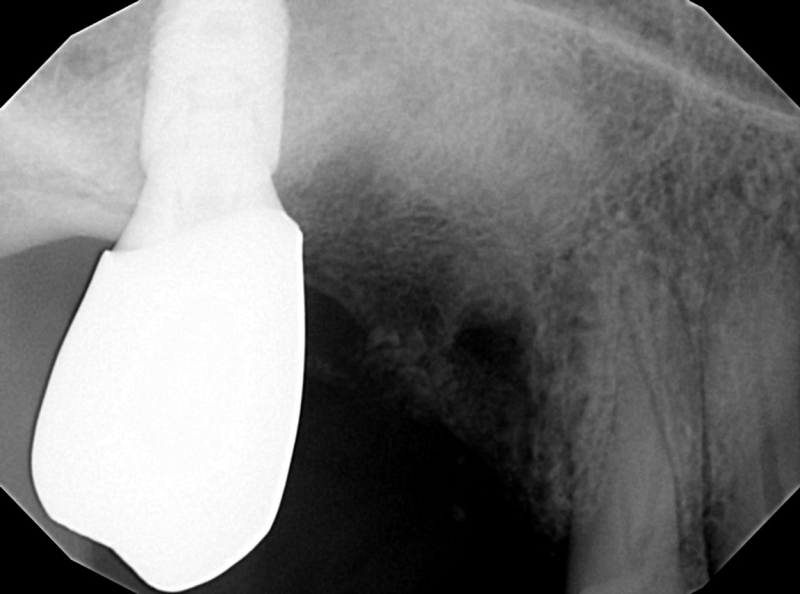
The areas of the implants #3 and 4 are now completely grafted including the apex of #2, and the distal position of the maxillary sinus.

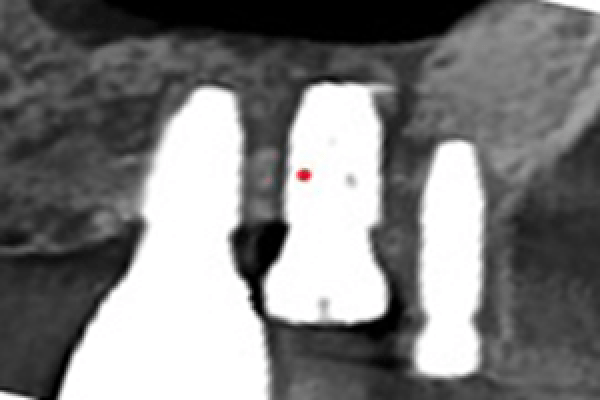
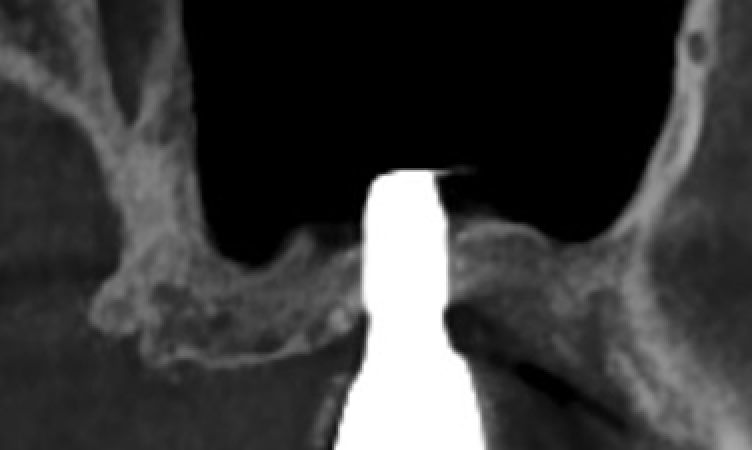
A post-op CT scan confirms that Sinus Graft has filled the floor of the sinus and covered the apex of the pre-existing implant #2.

Another section of the CT scan of the pre-existing implant #2 shows lift of the membrane and complete coverage of the implant.

Sinus Graft as long term success rate of 97%:

Short term success rates are 100% with no complications due to the minimally invasive nature of the procedure. In over 15 years of use, Sinus Graft has never resulted in a post operative infection. Post operative pain is no greater than routine implant placement as flap and bone removal are no greater than simple implant placement. The Trans-Osseous Sinus Augmentation procedure where the sinus membrane is never contacted eliminates sinus membrane perforation.

With only a few millimeters of available bone, this technique was designed to simplify a minimally invasive sinus bump by using a single syringe of 0.3 cc of BioDensification material. Total cost to you per syringe is $50.

If a complete sinus augmentation is needed, after performing the hydrodynamic sinus bump technique using BioDensification, Sinus Graft is then used to lift the membrane to the desired height, determined by the amount of graft material injected. Implants are always placed at the time of grafting because all injectable SteinerBio graft materials achieve implant integration as mineralization of the graft material occurs. With traditional bone grafts, if there is less than 5 mm of native bone, the implant success rate decreases significantly.

SteinerBio’s technology is fundamentally different. Our patented process stimulates osteoblasts to secrete osteoid directly onto the implant surface during bone regeneration. As the osteoid matures, it forms bone that integrates with the implant. This is ideal for immediate implant placement, sinus bumps, and sinus augmentations, since the implants are placed simultaneously with grafting. Sinus Graft sets hard approximately 30 minutes after placement.

As a result of this technology, once the graft material is placed, it will retain that shape as it mineralizes. Three months after grafting and implant placement, your implants are ready to be loaded.

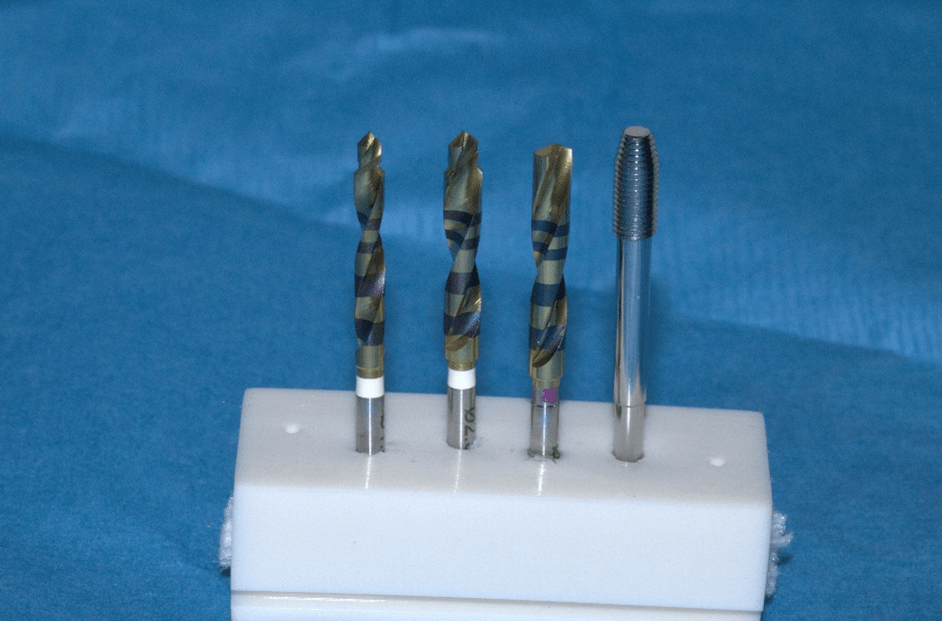
The Trans-Osseous Sinus Augmentation Kit is very simple. From start to finish the kit has two pilot drills with a specialized drill that has a flat end as demonstrated below (the third drill on the right). After the flat drill is used to approach the sinus floor, the osteotomy is then filled with BioDensification and the custom driver is used to push the graft material into the sinus (4th image on the right).

After the sinus bump or full sinus augmentation is complete, the osteotomy is enlarged to fit the implant of choice. Most dentists will already have the pilot drills available in their implant kit therefore, the Trans-Osseous Sinus Augmentation Kit is being offered without the two pilot drills. We are preparing the kits for sale at this time. If you are interested in purchasing the 2 drill or 4 drill kit, please click the link below and we will contact you for pricing and availability.

New bone graft technology permits new surgical innovations.

MEMBER:

American Society for Bone and Mineral Research (ASBMR)

Tissue Engineering and Regenerative Medicine International Society (TERMIS)

American Academy of Implant Dentistry (AAID)