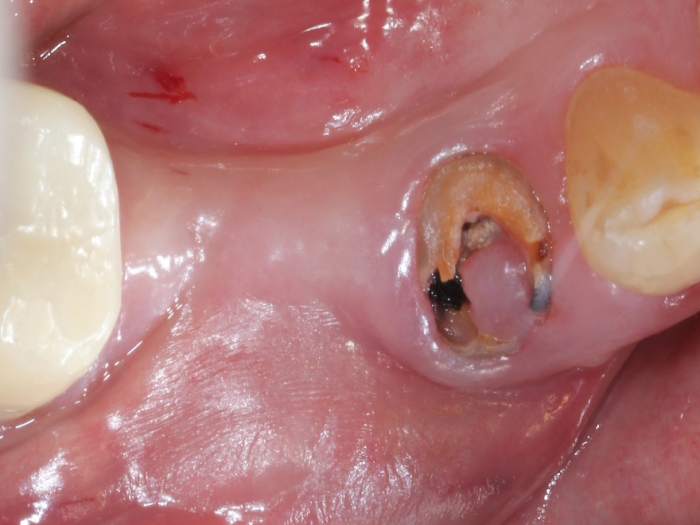
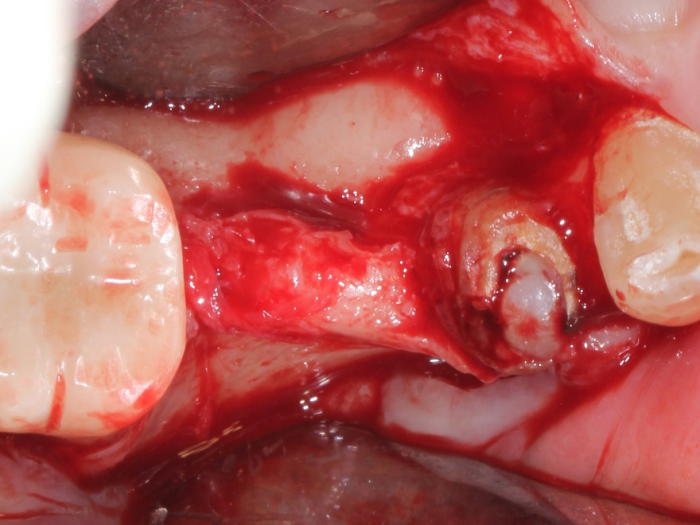
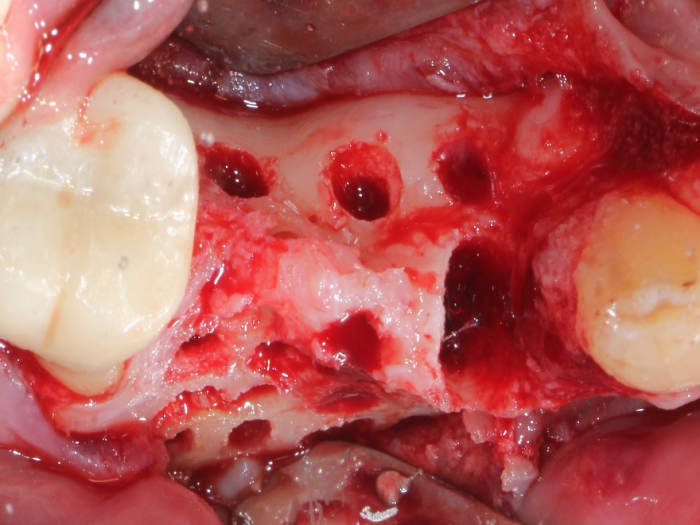
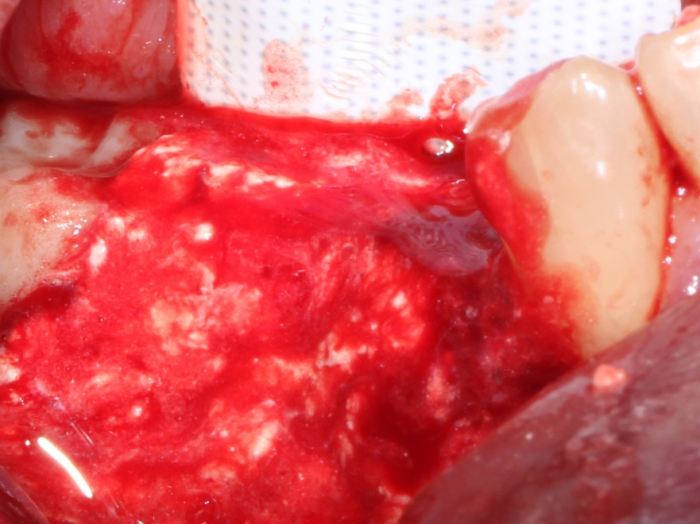
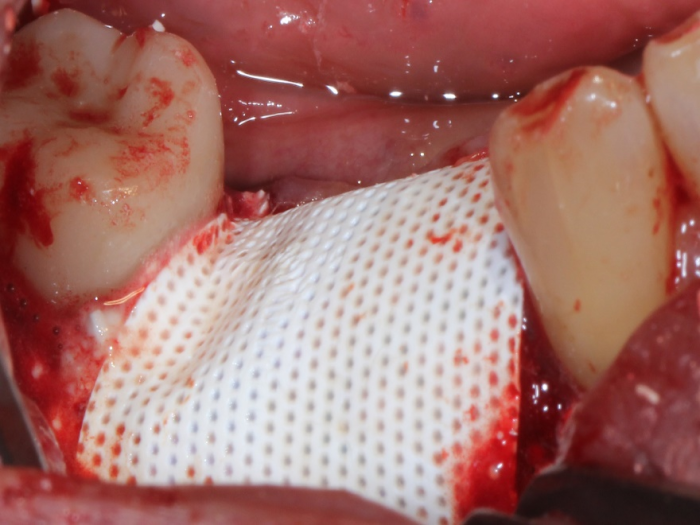
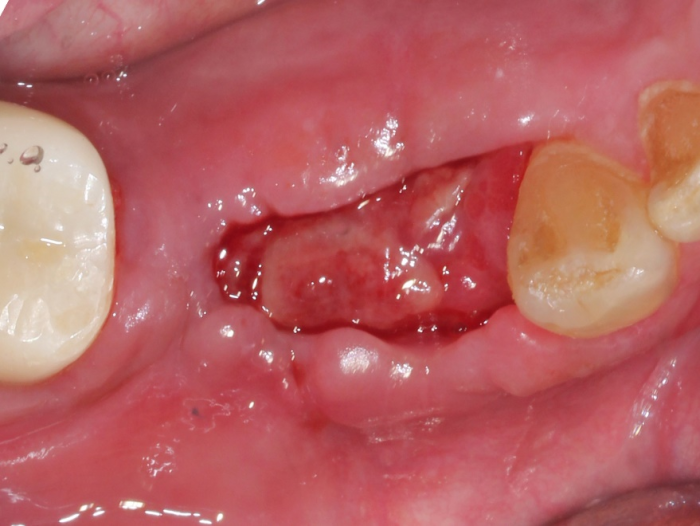
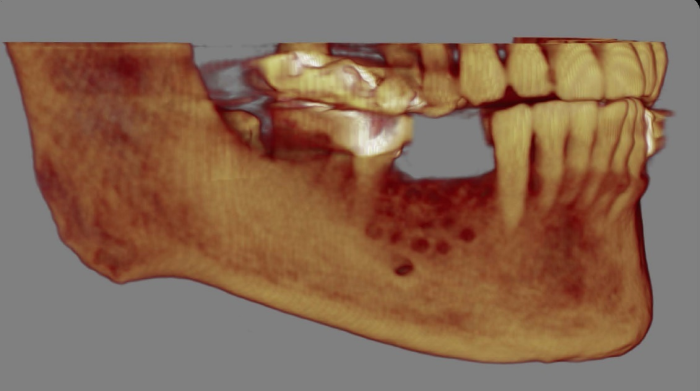
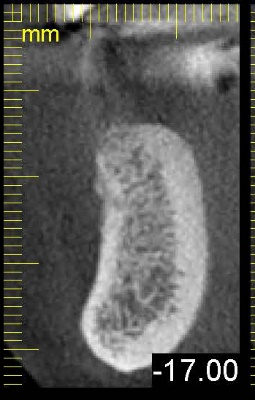
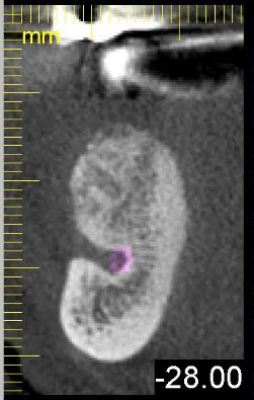
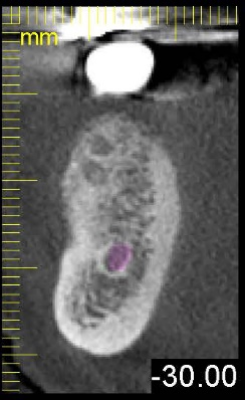
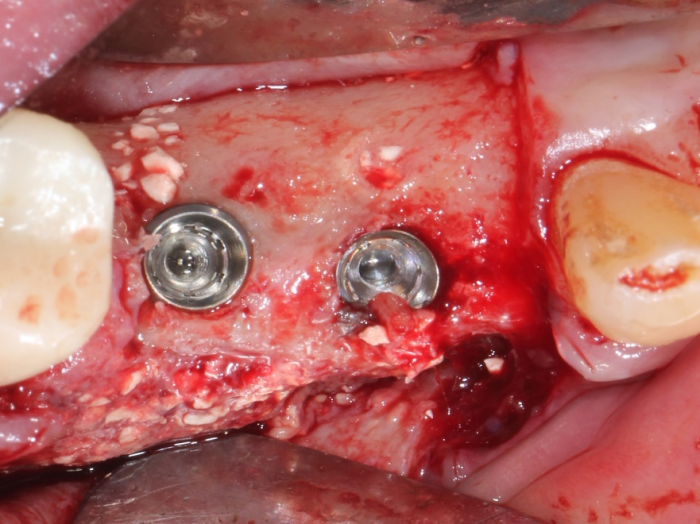
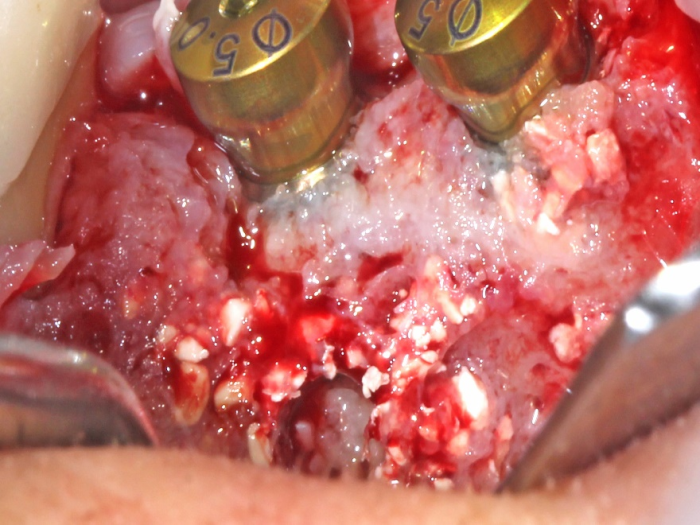
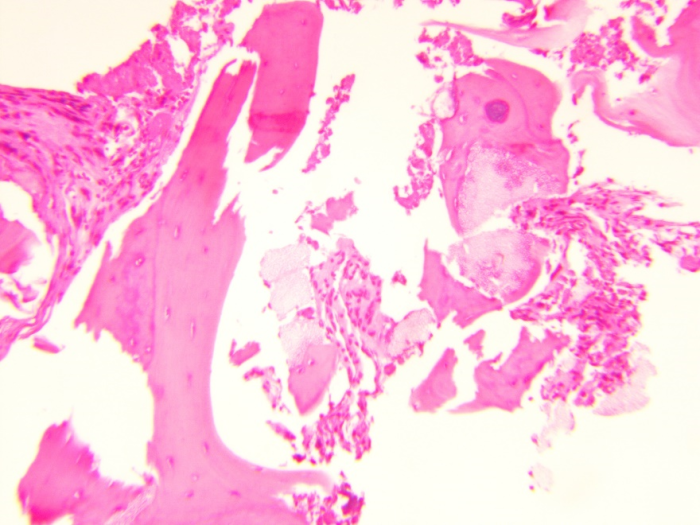
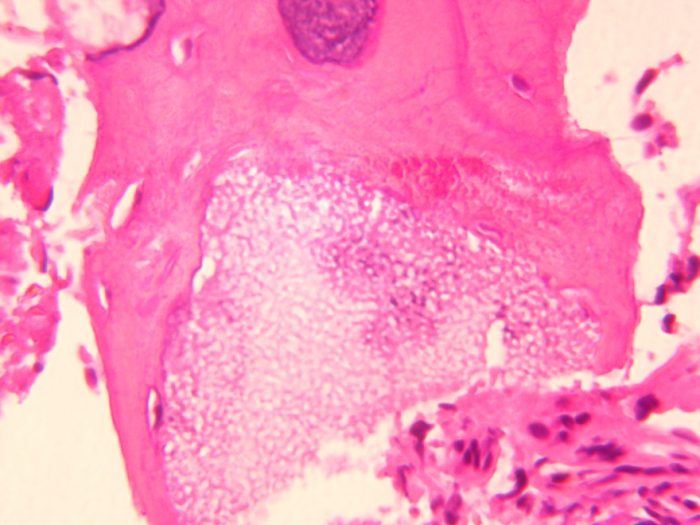
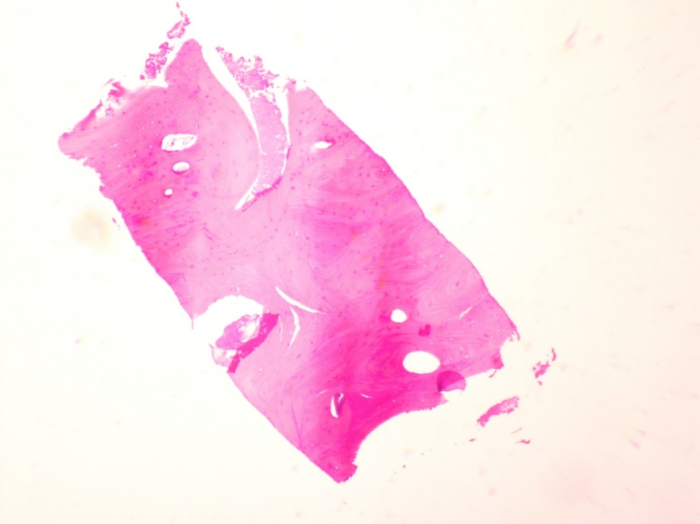
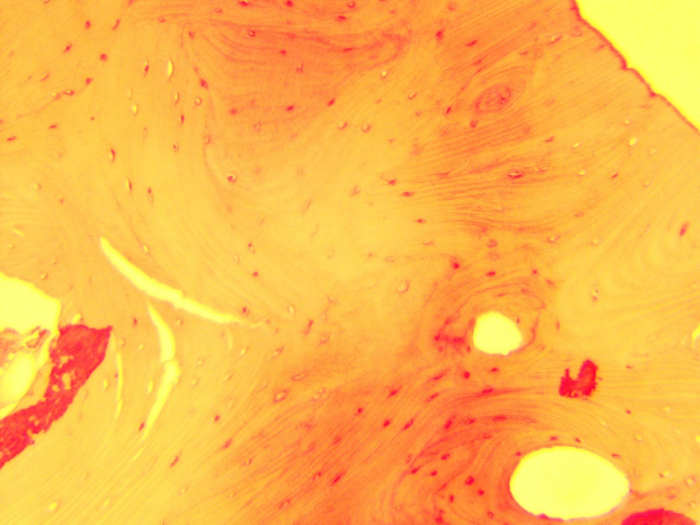
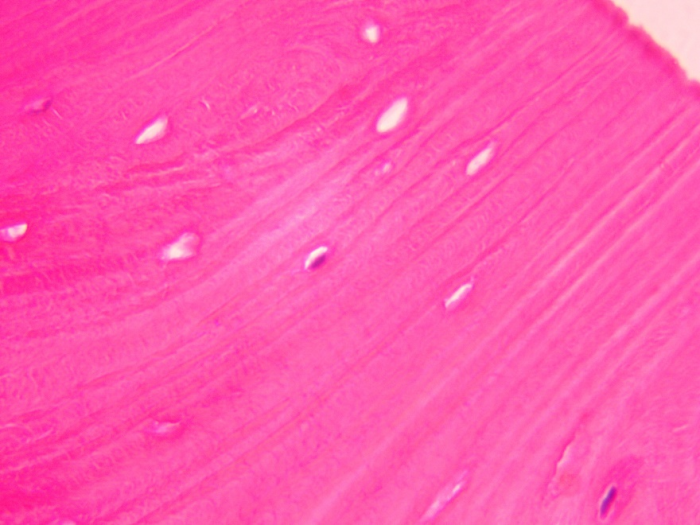
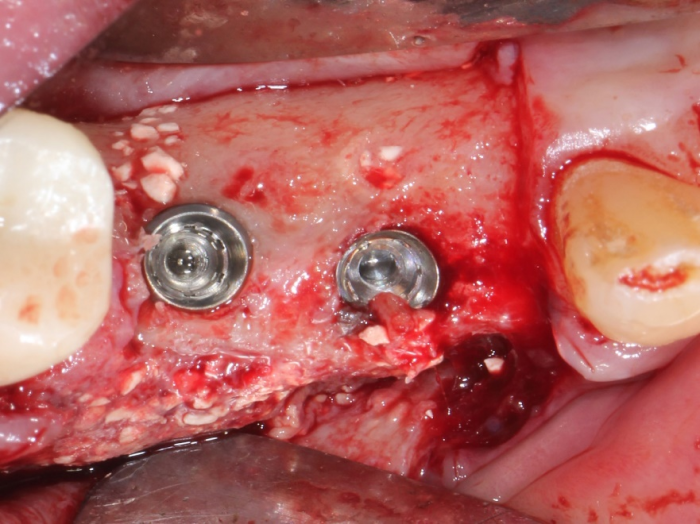
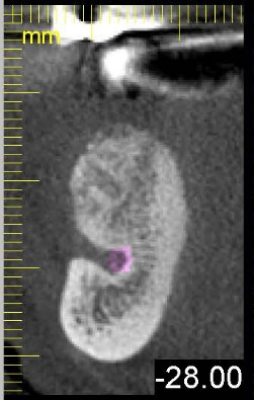
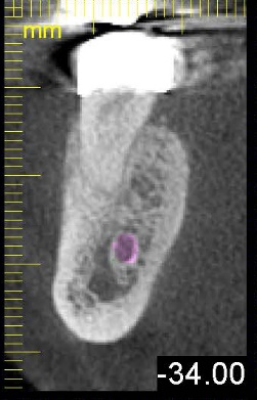
The CT scan from the area of the core sample shows the lingual cortical bone completely regenerated at 4.5 months, but the buccal cortical bone is still maturing, even though the core sample shows newly formed lamellar bone.
Bone regeneration is always interesting and this case is no different. Here, we have a chance to compare buccal and lingual bone regeneration and we find that lingual bone formation proceeded much quicker than buccal bone formation. When no load is present, it appears that our bodies aggressively regenerate lingual bone but buccal bone regenerates more passively.
It is proposed that buccal bone and lingual bone have two different purposes. Because a tooth is floating in a periodontal ligament, the tooth does not contribute to the load carrying mass of the jaw. It is proposed that the purpose of the buccal bone is to support the tooth and the purpose of the lingual bone is to support the load carrying capacity of the jaw. When a tooth is removed, there is no need for the buccal bone, therefore, it is resorbed. However, if the purpose of the lingual bone is to support the load carrying capacity of the jaw to prevent fracture, the lingual bone is maintained.